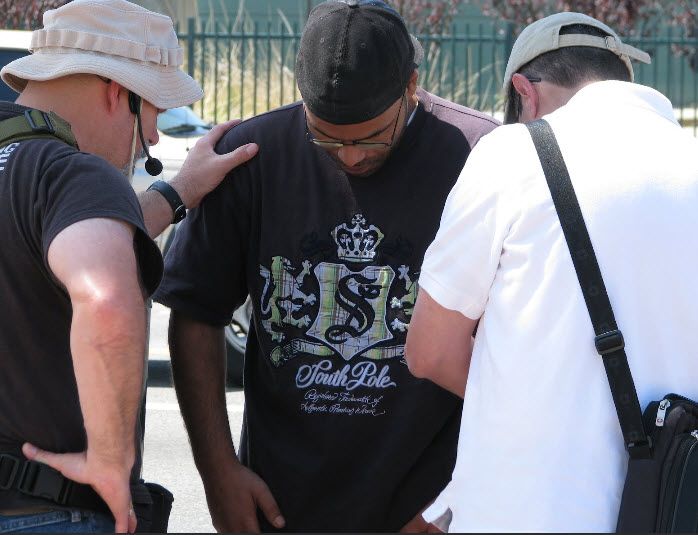
Pure and faultless religion

2019-02-10_20-31-35

Those who consider themselves religious and yet do not keep a tight rein on their tongues deceive themselves, and their religion is worthless. Religion that God our Father accepts as pure and faultless is this: to look after orphans and widows in their distress and to keep oneself from being polluted by the world.

James 1:26-27

Background

This book is widely considered to have been written by Jesus half-brother – James.

James became a pillar in the faith after Jesus resurrection. He was pragmatic.  He was unapologetic.  And he was focused on action.  Some might say he was cut from the same cloth as the disciples.

James made the case that faith without good deeds was dead and worthless (James 2:17).  Simply, a life of faith would produce fruit.  And early in his letter he made the case that caring for orphans and widows was a central responsibility of the church.

Reflections

James simplified pure religion into 3 buckets:

  1. Looking after orphans
  2. Looking after widows
  3. Maintaining a righteous life

I’ll address #3 in another blog entry.

James isn’t the first reference to God’s affinity for the orphan or widow.  God’s heart is revealed for orphans and widows in both Psalms and Deuteronomy.

Let’s do some math.

There are currently over 15.1 million double orphans in the world (children who have lost both parents)[1]. Within the US there are approximately 438K children within the foster care system with an estimated 118K waiting to be adopted[2].

There is an estimated 258M[3] widows globally with 11M[4] widows estimated in the US.

Barna group identifies a “practicing Christian” as a person that attends a religious service at least once a month and says their faith is very important in their life. An estimated 31% of US adults fit into this classification according to a recent study[5], meaning there are about 78M practicing adult Christians[6].

Active engagement by the US Christian community alone could mathematically provide massive healing for the world double orphan crisis and the US foster care system needs.

Additional activation of Christians outside of the US would further alleviate the global need for both the orphans and widows.

Pure religion. A faith that James would call alive.  And bearing fruit.

Is this easy? No. Could this be uncomfortable?  Yes.  Would more active engagement in addressing these needs illustrate a Christian faith to nonbelievers that extended much deeper than an exclusive evangelistic or outreach formula?  Likely.  Would a more aggressive approach here be viewed favorably by the Lord?  Absolutely.

Why not?

Lord, help us not to lose focus here. There are so many programs and focuses that dilute our attention.  Many of which do not rise to the level of importance of alleviating pain for orphans and widows.  Help us and the church to become fixated on practicing “pure religion”.  Please soften our hearts so that we can extend love to the hurting in a greater way.  Our hearts need to be changed.  Amen.

What if the church body banded together across denominations to eradicate pain and loneliness in the orphan and widow communities?

What if the world began seeing and recognizing a church laser-focused on erasing hurt and pain versus one more centrally focused at times on their preferred political positions?

[1] UNICEF estimates.

[2] The 2017 AFCARS Report from the US Department of Health and Human Services, Administration for Children and Families.

[3] June 23rd, 2017 Reuters article.  Factbox: Global number of widows rises as war and disease takes a toll.

[4] October 31st, 2017 CNBC article.  Widows with wealth:  Managing money after losing a spouse.

[5] September 15, 2016 Barna.  The State of the Church 2016

[6] US Census Bureau 2018 population total estimate of 325M at 77% over 18 at 31% practicing Christian rate.

Waiting and waiting and waiting…

hourglassmeaning2

When God made his promise to Abraham, since there was no one greater for him to swear by, he swore by himself, saying, “I will surely bless you and give you many descendants.” And so after waiting patiently, Abraham received what was promised.

Hebrews 6:13-15

Background

The Lord promised an heir to Abraham years before.  And the waiting must have been excruciating.  It often is. Year after year there was no child with Sarah to show for it. But the promise remained.  As did the waiting.  And more waiting.

As Abraham was approaching 100 years old and Sarah 90 years old, angels visited on their way to scout Sodom and Gomorrah.  The promise had not yet been realized.  The angels provided another reminder.  A child would be borne to Sarah within a year.  Sarah laughed and thought the angel’s comment a bit absurd.

Abraham patiently waited.  And Isaac was borne.  Decades after God’s initial promise.  But delivered in a glorious fashion.

Reflections

We live in a culture that increasingly values speed.  Industries have emerged that respond to these cultural trends.  Fast food.  Quick shopping and check outs.  Quick ATM and online banking.  Quick answers on line.  Time is a precious commodity.  We have expectations for speed.  I do.

And our societal expectations can easily transfer to a similar speed lane expectation for God.  Why is it taking so long?  God, have you forgotten?  I’m desperate.  And you have yet to answer.  Could you please accelerate the pace here?

  • A family member needs your saving grace
  • My friend’s medical diagnosis needs your intervention
  • My addiction needs healing
  • My work situation is desperate

And we often wait.

And yet we should remember that waiting in many cases seems to be a biblical standard operating procedure.  Abraham waited.  Noah waited.  Moses waited.  Joseph waited. Mary and Martha waited for Jesus to heal Lazarus.  Even the disciples waited and prayed for the Holy Spirit.

All too often it seems that answers come later…but God’s timing is never late. It is always perfect.  Not necessarily in satisfying our desire for a quick resolution.  But in designing a tapestry that brings the most glory to Him.

Lord, I am not good at waiting. I get impatient and frequently want relief and answers quickly.  Help us all to remember your faithfulness.  And that you are good.  And you have this.  And that you typically work through a process.  Often a longer process than we would like.  Help us to be patient and to persevere in our waiting.  Not to give up and lose faith if our expectation for an immediate fix doesn’t materialize.  Amen.

What if we truly invited God to do a work in us in the waiting process versus frequently looking for a quick fix?

What if we persevered in our faithfulness to God even for decades, if necessary, as many of the biblical characters above did?


Hope – An unlikely position…

hope-and-a-future

“And now these three remain: faith, hope and love. But the greatest of these is love.”

1 Corinthians 13:13

Background

The church of Corinth was founded by Paul. And it was in trouble.  Divisions were forming.  Disagreements were frequent.  And it was time for truth telling.  And a reset.  It was time for a letter.

The thirteenth chapter of Paul’s letter reminds the church of the critical ingredient of love. And there may not be another chapter in scripture that celebrates and positions love more eloquently than in these 13 verses.

But tucked away in the last verse Paul positions the most important Christian values: Love (I get it); Faith (I get it)…Hope (hmm).

Reflections

Hope is an important value…but does it really justify a position sandwiched between faith and love? Paul thought so.  Hope must be a critical ingredient of a vibrant life.

It is interesting to me that Job has the second most references (18) to hope of any book in the bible – Only Psalms, with 34 references and 142 more chapters has more…

Job’s life was in meltdown mode. Most in his family were taken from him.  His wealth evaporated.  His health faded badly.  Job’s anguish was real.  And yet through it all he held onto something.  Is it possible that the presence of hope in the midst of a dark crisis gets us to the other side?  That it serves as motivation for the next step?  Or the next breath?

Have you ever been in a situation like me where you thought you were boxed in and all seemed dark? A medical prognosis was bleak?  A relationship seemed irreparably damaged?  A marriage lacked life?  There was no way to turn?  A way out couldn’t be found?   Darkness.  And then….a small glimmer of hope emerged.  Light.  Hope has power.

We serve a God who specializes in hope. A God who laughs at the impossible.  A God who isn’t limited by history or science or the likely.  And a God who redeems the flat out broken.  A God who believes that hope is on the level of faith and love.  I get it.

Lord, this world is desperate for hope. The enemy seeks to rob us of this value. To give up.  Infuse hope in greater measure into our lives.  Let it provide connectivity to greater faith.  Let us be reminded that there is no crisis or situation you can’t redeem.  Help us to more firmly be hopeful in all.   To model it to a world desperate for the same.  Let our churches be oases of hope.  Amen.

What if the church offered a perspective that more effectively and frequently breathed hope into broken marriages; lives frought with addiction; relationships in disrepair; those tortured with physical or emotional bondage; or those lonely?

What if we served as increasing conduits for those recipients of injustice? And the most hurting among us?

Choosing earthly treasures…

2018-11-25_3-24-33

As He was setting out on a journey, a man ran up to Him and knelt before Him, and asked Him, “Good Teacher, what shall I do to inherit eternal life?”  And Jesus said to him, “Why do you call Me good? No one is good except God alone.  You know the commandments, ‘Do not murder, Do not commit adultery, Do not steal, Do not bear false witness, Do not defraud, Honor your father and mother.’”  And he said to Him, “Teacher, I have kept all these things from my youth up.”  Looking at him, Jesus felt a love for him and said to him, “One thing you lack: go and sell all you possess and give to the poor, and you will have treasure in heaven; and come, follow Me.”  But at these words he was saddened, and he went away grieving, for he was one who owned much property.

And Jesus, looking around, said to His disciples, “How hard it will be for those who are wealthy to enter the kingdom of God!”  The disciples were amazed at His words. But Jesus answered again and said to them, “Children, how hard it is to enter the kingdom of God!  It is easier for a camel to go through the eye of a needle than for a rich man to enter the kingdom of God.”  They were even more astonished and said to Him, “Then who can be saved?”  Looking at them, Jesus said, “With people it is impossible, but not with God; for all things are possible with God.”

(Mark 10:17-27)

Background

Jesus was approached by a young man. One of those guys who was deliberate and intentional…somebody who seemed to have it all together.  He had likely worked hard in his professional life. The guy had accumulated wealth – box checked.  Status – box checked.

But he had this gnawing feeling. “Good teacher, what shall I do to inherit eternal life?”

       Jesus – “Keep the commandments”

Young ruler – “Teacher, I have kept all these things from my youth up”

Jesus – “One thing you lack. Sell all your possessions.  Give the money to the poor.  And you will have treasure in heaven.  Then follow me”

He left sad. He had great wealth.  A safe life chosen.  The treasures of this world chosen over the treasures of the next.

This episode was watched closely by the disciples. In the follow-up Jesus made an even more radical statement “It will be easier for a camel to go through the eye of a needle than for a rich man to enter the kingdom of God”.  The disciples were astonished.

Interesting. Those of us “blessed” with wealth are at a disadvantage of entering the kingdom of God.

Reflections

It is easy to read this scripture and stand on the sidelines. “Mr. and Mrs. so and so have a big boat and vacation house.  They drive a big car.  They are the ones that are really rich.  Not me.”   Many of us tend to compare ourselves with others a few rungs up in the socio-economic structure.

Over the last year my job has taken me to places in Bangladesh; India; Cambodia; Philippines; Vietnam and China. I’ve watched the people closely.  I’ve concluded that most of us Americans are rich.

This passage scares me. Has money over the years captured portions of my heart?  Tethered it to thinking of vacations; entertainment; restaurants; cars and stuff?  Would I have sold it all? Would I have pursued a life of untold memories with Him and the other disciples?…Or left sad?  Do I focus on building up treasures in heaven…or treasures on earth?

I have typically not pursued ostentatious material things (in my opinion). I package it more subtly.  I have pursued financial security for my family.  And often at the expense of relationships.  Many times I’m afraid that I have made the wrong choice and walked away…sad.

Lord, this scripture is so challenging. Help me not to minimize the message and pretend that this doesn’t apply to me.  Rationalize it away.  Let your holy spirit drive this truth deep into my heart.  Help me to understand that you don’t ask us to give something up without returning something of greater value.  The rich ruler’s life would have been so much more meaningful having followed you.  Help me to trust you.  And to be willing to give it all.  Holding nothing back.  Willing to trust you. Amen.

What if God asked us to sell it all, give it to the poor and follow Him?


Winepress laborer…or mighty warrior?

2018-11-18_12-05-46

The angel of the Lord came and sat down under the oak in Ophrah that belonged to Joash the Abiezrite, where his son Gideon was threshing wheat in a winepress to keep it from the Midianites.  When the angel of the Lord appeared to Gideon, he said, “The Lord is with you, mighty warrior.”

“Pardon me, my lord,” Gideon replied, “but if the Lord is with us, why has all this happened to us? Where are all his wonders that our ancestors told us about when they said, ‘Did not the Lord bring us up out of Egypt?’ But now the Lord has abandoned us and given us into the hand of Midian.”

The Lord turned to him and said, “Go in the strength you have and save Israel out of Midian’s hand. Am I not sending you?”

 (Judges 6:11-14)

Background

The Israelites had blown it again. Because they did evil in the eyes of the Lord, He had handed them over to the Midians for seven years.  It was oppressive.  So much so that the Israelites found shelters in mountain clefts and caves.

Seven years was a long time. It was so difficult… that they eventually cried out to the Lord.  He was waiting.  And He was ready.  He always is.  It was time for deliverance.  But the Lord needed a leader…a warrior.  A mighty warrior.

Now for the selection process. Surely the Lord would work through his celestial rolodex and identify men who were good with the sword.  With great leadership pedigree.  Someone with a ferocious and charismatic personality.

Or maybe not.  His candidate for a primary role in this Old Testament narrative would be reserved not with someone who had a reputation as a Mighty Man. Or someone who earned the role based on prior accomplishments.  No, this assignment was reserved for a man working the winepress.

And the angel didn’t address Gideon through the filter of his past. For this unlikely assignment, He was addressed through a title that would define his future – mighty warrior.  No one saw this one coming.  God did.  Gideon was crafted and created for a big assignment.  And the time was now.

Reflections

The enemy whispers to many of us that we aren’t worthy.  It is easy to focus on our past.  Our failings and weaknesses.  And we subtly buy into the lie that impacted Gideon – “Surely, God would not choose a vessel for an important assignment that was ordinary or even marred and broken”.

But we don’t serve a god who views us through the filter of our past. He is more than able to redeem our weaknesses.  And more than willing time after time to use imperfect characters to execute critical assignments.  With his grace we are viewed through the filter of our future.

Lord, thank you for your stories demonstrating that in your math you prefer to use ordinary and even weak characters. It gives me hope.  Please help us to shake off the memories of our past.  To prayerfully step into this future plan that you have designed for us.   Be glorified in our life.  Amen.

What if God similarly sees you as a Mighty Warrior with an intention to wreck havoc on the other realm through His grace and power?  What might that assignment look like?  There is still time.

Sharing in the mission…

2018-10-28_22-50-21

He said to them, “Go into all the world and preach the gospel to all creation”.

(Mark 16:15)

Background

Jesus had risen. And had reappeared to the Eleven.  His message before being taken up to heaven would be his last direct conversation with them.  It was important. Surely the disciples would ponder these last words.  These words included the instruction to go into the world and preach the gospel.  They obeyed.

Reflections

Sharing our faith is a critical activity of discipleship. It extends the good news.  It expands the kingdom both in this life and the next.  Sharing the hope of the good news offers freedom to the enslaved.  Peace for the stressed.  Joy to the depressed.  Healing for the hurt.  And eternal life.  And yet…it may also be less practiced than any other spiritual activity in the western church today. Why?

The George Barna research group commissioned a study in 2017 entitled “Survey: Christians are not spreading the gospel”.  The study found that only two out of every five Christ followers even believe they should share Christ with others.

Given the expansive power of this discipline, it would only be natural that the enemy would spend some of his best creative energies to subtly deceive us:

  • Evangelism is really best communicated by our pastor or by speakers in large Christian conference settings…”pastors and high profile speakers are so much more eloquent in sharing faith than you”
  • Evangelism should be the principle responsibility of those gifted in that area…”that isn’t your gift – let others focus here”
  • We may not have sufficient theological training to answer tough questions…“It is likely that you will be asked a faith question you won’t have the answer to”
  • It is sufficient for us to exclusively model our faith by our actions…”modeling a faith based life silently is more than enough”
  • Our personal relationships could be strained and perceived to “be pushy” if we more actively shared our faith…”your relationship could be fractured if faith talks are introduced”

The benefits of accepting the good news is enormous. And yet the whispers are powerful.  Many of us have come to believe the lie.

Each one of us have a unique faith story. How this Jesus relationship has reshaped our life.  It is this unique voice that personalizes the message for our friend or family member.  It is possible that our experiences and story were uniquely shaped to convey this message more clearly than any other means to the person God placed in our lives.

It is time to ignore the lie.

Lord, many of us have delegated evangelism and sharing the good news to others in authority, including our pastors. You know this was never your vision.  Break the lies and the whispers.  Let us live lives that move beyond just being a good example …silently.  Let us catch a vision for the stakes here.  Please move in all of our hearts.  Amen.

What if each of us prayerfully shared our story and faith journey at least once on a monthly basis?

What if our individual life experiences and hurts were crafted to better connect and share the good news with that person You placed in our life than any other possible means?

Protecting your heart

2018-10-21_11-55-45

For from within, out of men’s hearts come evil thoughts, sexual immorality, theft, murder, adultery, greed, malice, deceit, lewdness, envy, slander, arrogance and folly. All these evils come from inside and make a man ‘unclean’.

(Mark 7:21-23)

This is why I speak to them in parables: “Though seeing, they do not see;
though hearing, they do not hear or understand. In them is fulfilled the prophecy of Isaiah:

“‘You will be ever hearing but never understanding;
you will be ever seeing but never perceiving.
 For this people’s heart has become calloused;
they hardly hear with their ears, and they have closed their eyes.
Otherwise they might see with their eyes, hear with their ears, understand with their hearts and turn, and I would heal them”.

(Matthew 13:13-16)

Background

The heart. There are currently over 1,000 references to the heart in both the old and new testaments.  The heart is referenced in most books of the bible…a continual reminder in scripture that there are few truths as important as guarding or improving the composition of our hearts.  The repetitive emphasis on the heart throughout scripture implies this topic is massively important to God.  It should be to us.

Understanding the context of the heart requires an understanding of the Greek word “kardia”. Our western culture frequently more narrowly interprets the heart to be the source of emotions.  The Greek definition, however, extends the definition to include the mind…or our thinking.

Put another way, for those of us intent on truly guarding or improving the composition of our heart it is important that we increasingly add disciplines into our life that shifts our thinking and invite God to transform our hearts and minds.

Reflections

With the advent of technology and apps, I’ve wondered what if an app was developed that could monitor our thoughts and chronicle our thinking on various topics?  What would it reveal?

What % of our time over a year would be focused on:

– Sports                                                  – News and/or current events

– Sex                                                       – Money

– Food                                                    – TV shows or Movies

– Vacation planning                           – Retirement dreams

– Politics                                               – Self-help or fictional reading

– Exercise plans/goals                       – Social media

or…

– Thinking about scripture                – Righting an injustice

– Worshipping                                      – Praying

– Helping an orphan/widow              – Reaching out to sharing good news

A mind increasingly focused on the second list leads to a heart whose texture becomes softened. A heart that increasingly sees the world and our own lives through God’s eyes.  A life that is now much more likely to identify and pursue God’s plan for us to cast incredible light in a dark world  “for such as time as this”.

It is interesting to me that certain topics such as leadership & seeker attraction have been of pinnacle church focus over the last 20 years (and I do believe in leadership development). However, I have this gnawing feeling that God may be most pleased with movements that are focused on heart restoration.

Craig Groeschel, pastor of Life Church, recently said, “Your life is always moving in the direction of your strongest thoughts”.

So…if a theoretical thought app was introduced, what would your stats reveal about your strongest and most frequent thoughts?  Where is your life moving?

Lord, you know that this has been a topic that you have been trying to get me to understand more fully for the last few years. You also know that I think all too often about the items on the first list above.  There are many parts of my heart that are still hard.  That need to be softened.  In some cases to be reconstructed.  Solomon asked You to give him wisdom and understanding.  I ask that you change my heart.  You are the great heart surgeon.  Please.  Amen.

What if as a church body we deliberately took action and added activities into our daily disciplines that increasingly shifted our thinking?

What if our new thinking implored us to more action? And the church increasingly was known to lean in…when others did nothing?… that the lives of Christ followers (and their hearts) were so different from others in culture.

What if God used our new thinking and new hearts to restore our marriages and relationships?

Obedient precision…


2018-10-14_19-02-36

Then the word of the Lord came to Samuel:  “I regret that I have made Saul king, because he has turned away from me and has not carried out my instructions.” Samuel was angry, and he cried out to the Lord all that night.  Early in the morning Samuel got up and went to meet Saul, but he was told, “Saul has gone to Carmel. There he has set up a monument in his own honor and has turned and gone on down to Gilgal.”

When Samuel reached him, Saul said, “The Lord bless you! I have carried out the Lord’s instructions.”  But Samuel said, “What then is this bleating of sheep in my ears? What is this lowing of cattle that I hear?”  Saul answered, “The soldiers brought them from the Amalekites; they spared the best of the sheep and cattle to sacrifice to the Lord your God, but we totally destroyed the rest.” “Enough!” Samuel said to Saul. “Let me tell you what the Lord said to me last night.” “Tell me,” Saul replied.

Samuel said, “Although you were once small in your own eyes, did you not become the head of the tribes of Israel? The Lord anointed you king over Israel.  And he sent you on a mission, saying, ‘Go and completely destroy those wicked people, the Amalekites; wage war against them until you have wiped them out.’  Why did you not obey the Lord? Why did you pounce on the plunder and do evil in the eyes of the Lord?”

“But I did obey the Lord,” Saul said. “I went on the mission the Lord assigned me. I completely destroyed the Amalekites and brought back Agag their king.  The soldiers took sheep and cattle from the plunder, the best of what was devoted to God, in order to sacrifice them to the Lord your God at Gilgal.”

But Samuel replied:  “Does the Lord delight in burnt offerings and sacrifices
as much as in obeying the Lord?  To obey is better than sacrifice and to heed is better than the fat of rams.

(1 Samuel 15:10-22)

Background

As the Israelites were leaving Egypt, the Amalekites ambushed them. Payback time was now.  And King Saul was chosen to enforce justice.  Samuel, the prophet, provided instructions to King Saul to destroy everything.  Everything.

The battle plan was initiated. The Amalekites were defeated.  But Saul and his men decided to execute a slightly different plan – they destroyed virtually everything but then they captured the king of Amalek, Gilgal, and next decided to keep some of the choice sheep and cattle.  Not for their use or pleasure.  They desired to sacrifice the best of the plunder to God.  A gift.  To specially honor Him for the victory.

But…they didn’t follow the specific instruction. The gesture was not appreciated.  In fact, this form of improvisation proved to be a big problem.  God wasn’t happy.  Saul’s kingship was no longer supported or anointed by God.  The cost for noncompliance was incredibly high.

God’s nature is revealed. More than offerings and sacrifices and worship, God prefers strict obedience.

Reflections

This component of God’s personality and nature is just as real as that of His boundless love. But maybe not as popular.  God loves obedience.  More so than offerings.  Sacrifices.  Or worship.  It is this picture of God’s personality that gives me pause.  And, frankly, scares me a bit.

Saul appeared to have good motives. He saw the plunder of the Amalekites was impressive.  And sought to honor God in an even better way than instructed.  Surely God would provide grace for a well-intentioned mistake?  Nope.

Another picture of his unyielding expectation for obedience…and high consequences for noncompliance is found in 2 Samuel 6:1-7. David had recovered the Ark and was returning it to Jerusalem.  No one was supposed to touch the Ark.  It was holy.  The Ark was being transported on a cart.  The ox in front of the cart stumbled and the Ark began to shift in the cart.  Uzzah reached out to protect the Ark so it wouldn’t fall.  God struck Uzzah down upon touching the Ark because of this “irreverent act”.

Our God seeks precise obedience. He loves righteous living.

I enjoy worshipping Him with music. I also enjoy providing tithes and offerings.  These are easier forms of worship for me.  But I’m afraid that my pursuit of obedience in many other parts of my life lacks precision.  It is sloppy and inconsistent.

Lord, your desire for precise obedience is clear. There are cases where by human standards the penalties for non-compliances are difficult to understand.  However, you are good.  You are holy.  And your ways have a purpose.  Help me to increasingly live a life that respects your strict affection for obedience.  A life that pursues discipline and precision.  Please forgive me for so many times where I have missed the mark.  Or focused my attention on what is easy.   Amen.

What if we brought the same discipline and precision often pursued in other parts of our life (e.g. improving performance in our favorite sport; dieting; enhancing our work performance etc) to pursuing obedience and righteousness?

Remembering the power


1102016056_univ_lsr_lg

At the time of sacrifice, the prophet Elijah stepped forward and prayed: “Lord, the God of Abraham, Isaac and Israel, let it be known today that you are God in Israel and that I am your servant and have done all these things at your command. Answer me, Lord, answer me, so these people will know that you, Lord, are God, and that you are turning their hearts back again.” Then the fire of the Lord fell and burned up the sacrifice, the wood, the stones and the soil, and also licked up the water in the trench. When all the people saw this, they fell prostrate and cried, “The Lord—he is God! The Lord—he is God!” Then Elijah commanded them, “Seize the prophets of Baal. Don’t let anyone get away!” They seized them, and Elijah had them brought down to the Kishon Valley and slaughtered there. (1 Kings 18:36-40).

A day later…

Now Ahab told Jezebel everything Elijah had done and how he had killed all the prophets with the sword.  So Jezebel sent a messenger to Elijah to say, “May the gods deal with me, be it ever so severely, if by this time tomorrow I do not make your life like that of one of them.” Elijah was afraid and ran for his life. When he came to Beersheba in Judah, he left his servant there while he himself went a day’s journey into the wilderness. He came to a broom bush, sat down under it and prayed that he might die. “I have had enough, Lord,” he said. “Take my life; I am no better than my ancestors.” (1 Kings 19:1-4)

Background

In the build-up to Mt Carmel, Elijah demonstrated fearlessness like few in scripture. He recognized God as the true power source.

He confronted King Ahab, who called Elijah a “troubler of Israel”. At great personal peril, Elijah boldly suggested that it was really Ahab and his family who created trouble by abandoning the Lord’s commands and following Baal.  Elijah offered a possible solution.  A contest.  Baal versus the God of Israel.  450 prophets for Baal.  One prophet for the God of Israel.  The god that could set the sacrifice on fire at Mt. Carmel would be the winner.  Game on.

The prophets of Baal started first. It was early in the morning. They cried out to Baal to ignite the sacrifice.  They danced.  They prayed.  All the time listening to the prophet of Israel smack talking.  “Shout louder –Your God must be deep in thought; busy; traveling or maybe sleeping!”.  The tension mounted.  The frustration grew.  It was now after lunch.  Baal had not shown up.

Next it was Elijah’s turn. To add to the drama Elijah instructed that they pour water over the sacrifice to the God of Israel.  Not once.  But 3 times.  And then Elijah prayed that the God of Israel would let his power be known.  And the fire of the Lord burned the sacrifice, the wood, the stones and soil and even the trench of water.  The God of Israel was the victor.

Elijah’s act of faith on a public stage has few scripture equals. Elijah knew the power of God.  Ahab now knew the power of God.  The Baal prophets saw the power.

But over the next day there is a shift.

Ahab left the scene. He went back and filled in Jezebel on the events of the previous day.   Jezebel had a simple message delivered to Elijah – “May the gods deal with me, be it ever so severely, if by this time tomorrow I do not make your life like that of one of them.”  And Elijah, the lion of faith the previous day, had a surprising response only a day later.  Elijah was afraid and ran for his life for a full day into the wilderness.

He had quickly forgotten about the power of his God.

Reflections

Our personal view of God’s power can define our spiritual temperature. Deep down do we believe His best displays of power were thousands of years ago?  Do we believe He is watching every detail of our lives and desires to unleash His power in both the big and the small?

And like Elijah we can quickly forget the power that has been breathed into our life. Healings from sickness.  Positive medical test reports.  Restored relationships.  Pathways out of circumstances when we believed there was no hope.

We too easily forget the triumphs…and the power of the past.  And focus on the obstacle in front of us.

Lord, the narrative of Elijah illustrates how easy it is to one day have faith and the next day to shift our line of sight to the perceived mountain in front of us. You are at our side in all times.  You desire to demonstrate your glory in our lives.  Help us to daily truly absorb and remember your power.  To remember all the times that you have stood by our side and delivered us.  To become more consistent in our faith.  Amen.

What if we began to chronicle in our journal the real life demonstrations of power and answers to prayer that God has breathed into our life?  And frequently read these entries as a reminder of God’s faithfulness to build faith for the obstacle ahead?

The eloquent whisperer

2018-07-29_20-05-16

Now the serpent was more crafty than any of the wild animals the Lord God had made. He said to the woman, “Did God really say, ‘You must not eat from any tree in the garden’?” The woman said to the serpent, “We may eat fruit from the trees in the garden, but God did say, ‘You must not eat fruit from the tree that is in the middle of the garden, and you must not touch it, or you will die.” “You will not certainly die,” the serpent said to the woman.  “For God knows that when you eat from it your eyes will be opened, and you will be like God, knowing good and evil.” (Genesis 3:1-5)

Background

Adam and Eve had lived a pretty amazing life in the garden. There was peace.  And purpose.  And a face-to-face relationship with God.  It was special.

And then satan entered the picture. His goal was to separate Adam and Eve from God.

His approach was subtle. But strategic. Satan suggested that God’s instructions and path was not in our best interests.  We should consider following an alternative direction.  Surely, this alternative path would be better.

Reflections

There is a spiritual assault on truth…what is truly important…and real.

This campaign to confuse; camouflage and distract isn’t new. It started very early.  Adam, who had communed directly with God unlike any other, was targeted.  And only 3 chapters into the biblical narrative the great tension began.  Satan was at it.  Eloquently suggesting that alternative paths to His instructions would really be in our best interests.  Subtly whispering that God was withholding some degree of pleasure and purpose from us.  Adam and Eve became distracted.  And convinced.  And fell for the lie.

If I’m honest I’ve asked myself, “Adam had a direct conversational relationship with God. He met with Him.  He knew him.  He knew His goodness.  How on earth could he have fallen for a lie given his first-hand knowledge of God?”  Seriously?!?

I’ve had similar thoughts about the Israelites who were being led out of Egypt. They witnessed Moses and Aaron, under God’s power, direct one miracle after another.  They were fed with manna from heaven; walked through the Red sea; daily witnessed His direction with clouds and pillars of fire directing their paths.  And yet many succumbed to doubt and the whispers from satan that maybe life really would be better back in Egypt.  Easier.  Seriously?!?

And then the Holy Spirit gently reminds me of another character that has all too frequently followed the whispers…me. Over much of my life I have all too easily fallen for the whisper that supports my view of ease; comfort; entertainment; and even pleasure.  The theology I’ve adopted has been desperate to include popular elements of the American dream that support what I really want in that moment or season…and I too have frequently yielded to the lie from the eloquent whisperer.

And after spending a season studying scripture and the gospel message, I’ve seen that the whispers have often directed me to subtly compromise. To pursue my own, more convenient gospel.  A gospel that pursues security versus spiritual risk-taking; financial freedom versus faith-filled kingdom living; entertainment consumption such as internet surfing versus disciplined time daily in scripture; time invested with friends and family versus with those poor and hurting and desperate for the good news.

God is good. It is now time to respond to the Holy Spirit.

Lord, your promises are good. They provide the foundation for a life that is rich.  And meaningful.  The promises aren’t always easy.  They sometimes require me to take a more difficult short-term path.  There have been so many times where I’ve opted for the alternative whisper that is meant to provide immediate satisfaction.  And draws my heart from you.  I’m sorry.  It is time for me to pursue you…and your promises.  And demonstrate a belief that your promises were designed not only for your best interests, but for mine.  I love you.   Amen.

What if we began to live lives that were more defined by being gospel-modeled versus American-dream modeled? What if we recognized that God’s promises and plans truly provide a framework for a much more satisfying life than offered by the eloquent whisperer?