Corinth letter – A radical theology

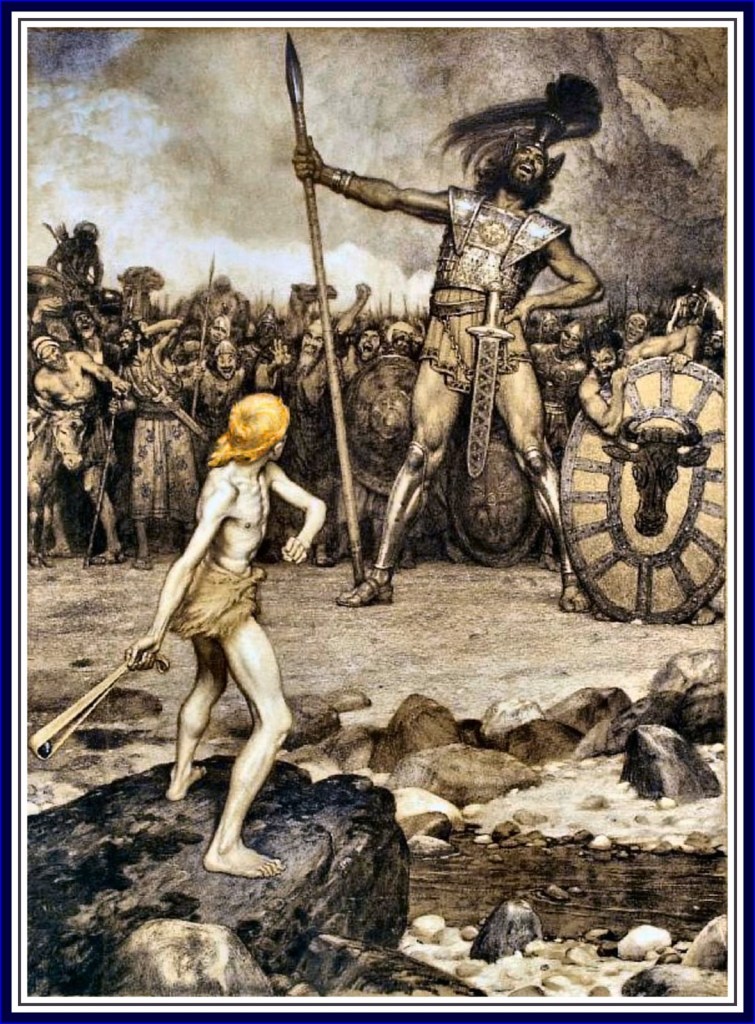
Picture is AI generated

But we have this treasure in jars of clay to show that this all-surpassing power is from God and not from us. We are hard pressed on every side, but not crushed; perplexed, but not in despair; persecuted, but not abandoned; struck down, but not destroyed. 10 We always carry around in our body the death of Jesus, so that the life of Jesus may also be revealed in our body. 11 For we who are alive are always being given over to death for Jesus’ sake, so that his life may also be revealed in our mortal body. 12 So then, death is at work in us, but life is at work in you.

13 It is written: “I believed; therefore I have spoken.”[b] Since we have that same spirit of[c] faith, we also believe and therefore speak, 14 because we know that the one who raised the Lord Jesus from the dead will also raise us with Jesus and present us with you to himself. 15 All this is for your benefit, so that the grace that is reaching more and more people may cause thanksgiving to overflow to the glory of God.

16 Therefore we do not lose heart. Though outwardly we are wasting away, yet inwardly we are being renewed day by day. 17 For our light and momentary troubles are achieving for us an eternal glory that far outweighs them all. 18 So we fix our eyes not on what is seen, but on what is unseen, since what is seen is temporary, but what is unseen is eternal.

2 Corinthians 4:7-18

But he said to me, “My grace is sufficient for you, for my power is made perfect in weakness.” Therefore I will boast all the more gladly about my weaknesses, so that Christ’s power may rest on me. 10 That is why, for Christ’s sake, I delight in weaknesses, in insults, in hardships, in persecutions, in difficulties. For when I am weak, then I am strong.

2 Corinthians 12:9-10

Background

Paul founded the Corinth church.  He loved this church.  But what had started as good.  Had been attacked.  Infiltrated by opponents.  Detractors.

Not surprising.  The good.  Is always attacked.

He had returned to the Corinth church in the years before this letter was sent.  And the reception was heartbreaking.  Rejection.  Likely humiliation.  Many would have cut their losses – moved on.  Found a group that welcomed him.  Valued him.  Even liked him.  Distanced themselves from the rejection. 

Not Paul.  Nope.  Paul was different.

This letter had multiple objectives.  One was to reject a central argument introduced by the antagonists – “Paul suffered too much to be a Spirit-filled apostle of the risen Christ” (ESV Commentary). Versions of the prosperity gospel starting early.  The argument being an apostle should be immune from the really hard stuff.  And the spirit of this argument had gained traction.  And it appealed to the imaginations.  Especially imaginations that wanted to believe that this gospel made life easier on this side of heaven.

Paul didn’t qualify for this type of gospel theology.  He suffered.  A lot.  Prisons.  Beatings.  Thirty-nine lashes – Five times.  Beaten with rods – Three times.  Stoned – Once.  Shipwrecked – Once.  And that wasn’t all of it.  Word had gotten around. 

Paul’s testimony couldn’t have been more at odds with the attractive gospel vision being shared by the others.

This authentic letter was intended to frame a different vision.  And that vision started with a reminder – We are clay jars.  And within that construct there is weakness.  We are “hard pressed on every side”; “perplexed”; “persecuted” and “struck down”. 

A Christian life often marked by difficulty.  

But.  Those verbs weren’t the whole story.  Each were connected to a critical reminder. The second half of the clause.  “pressed on every side not crushed”; “perplexed – not in despair”; “persecuted – not abandoned”; “struck down – not destroyed”.  

In this life – we have to remember the other side.

The critical insight is emphasized in chapter 12:9-10…God’s power “is made perfect in weakness”.  And in that belief, Paul had come to embrace a much different type of theology than the one introduced by the Corinthian detractors.  Paul so much believed this truth that he actually delighted in weaknesses.  Insults.  Hardships.  Persecutions.  Difficulties.   

Because, strength can be revealed and even forged in weakness.

Reflections

This theology is hard.

Paul’s truth is essential to guide centered perspectives.  To move beyond a thinking that yearns for outcomes on this side that are exclusively easy.  Comfortable.  Happy.  Connected.

But instead to recognize that His power is made perfect in my weakness.  And that in hardship, or difficulty.  We are made strong.  

These last few years have been one of those seasons.  A hard season.  A season that was brought on by me.  Bad decisions.  Mistakes.  Regrets.  I journal almost every day.  Electronically.  And this software package allows me to view my thoughts.  And prayers.  From the exact day one year ago.  Two years ago.  Up to 6 years ago.  I am frequently interested in what was on my mind in years past.  On that same day.  And I have found a consistent theme.   Prayer after prayer.  Day after day.  Praying for the same things.  That all would be healed.  Restored.  Made better.  Fixed.  Made comfortable.  Easier.  Happier.

I have yet to find a prayer – “Lord, today…please amplify my weakness.  My limitations.  Even my discomfort and pain…so that you can be lifted up today.  Use my weaknesses or failings to make you look stronger”.

Theology matters.  How we live God-centered theology matters even more.

Ok.  That’s enough.  Let’s do this.  That streak is going to end.  Today.

Let’s pray.

Lord, thank you for my hard season.  For the crushing.  For the pressing in.  Yes.  Even for the loneliness. 

Today.  Tonight.  Please consider making me even weaker.  Even more uncomfortable.  Through a hardship.  But don’t let the story stop there.  Create the other side.  Use my weakness in some way to lift You up.  Do whatever you need or can to let my story and circumstances cast incremental glory to You. Perhaps even to make me stronger.

Help my theology.  My prayers.  To not conveniently yield to attractive theories that seem so appealing.  Comfortable.  But instead to increasingly get excited about being open to a form of incremental weakness.  Difficulty.  Hardship.  Just like Paul.

I trust You.  In the hardship.  That I won’t be crushed.  I won’t be in despair.  I won’t be abandoned.  And I won’t be destroyed.

Let’s do this. 

To You be the glory.

Amen.    

What if we lived this theology to the extent that Paul did?  How would our conversations change about our difficult hardships?  How would our prayers change?

What if peace and joy began to increasingly emerge as we adopted different thinking?

Transformation – In the desert…

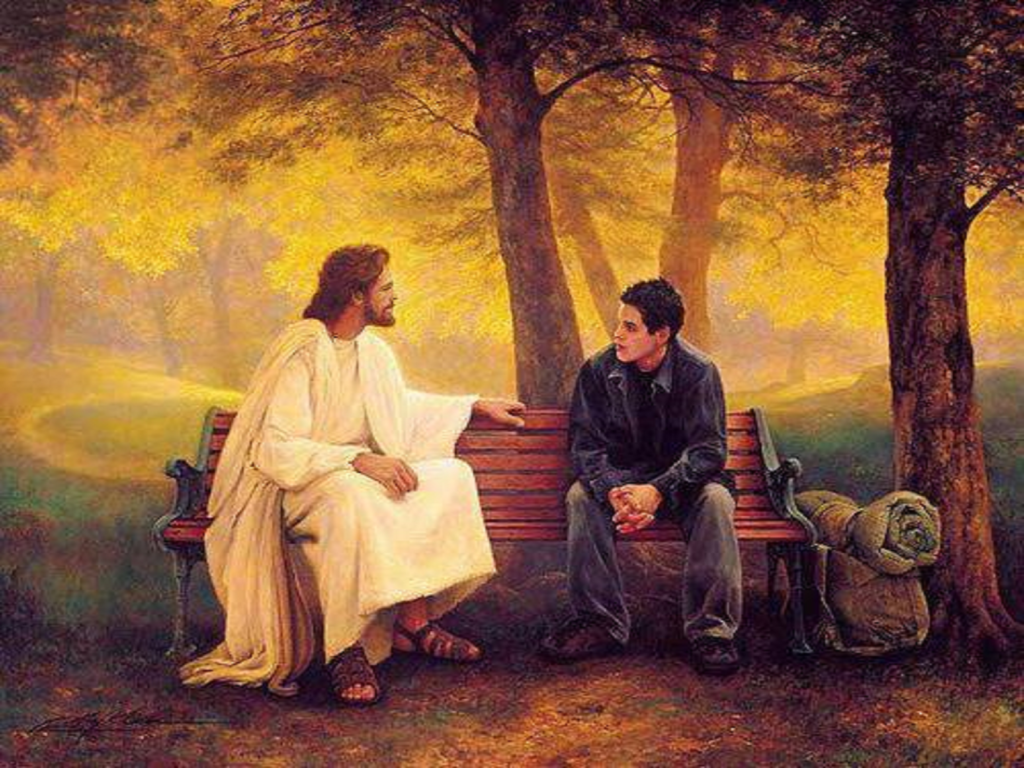
AI generated image

Background

23 During that long period, the king of Egypt died. The Israelites groaned in their slavery and cried out, and their cry for help because of their slavery went up to God. 24 God heard their groaning and he remembered his covenant with Abraham, with Isaac and with Jacob. 25 So God looked on the Israelites and was concerned about them.

Now Moses was tending the flock of Jethro his father-in-law, the priest of Midian, and he led the flock to the far side of the wilderness and came to Horeb, the mountain of God. There the angel of the Lord appeared to him in flames of fire from within a bush. Moses saw that though the bush was on fire it did not burn up. So Moses thought, “I will go over and see this strange sight—why the bush does not burn up.”

When the Lord saw that he had gone over to look, God called to him from within the bush, “Moses! Moses!”

And Moses said, “Here I am.”

“Do not come any closer,” God said. “Take off your sandals, for the place where you are standing is holy ground.” Then he said, “I am the God of your father, the God of Abraham, the God of Isaac and the God of Jacob.” At this, Moses hid his face, because he was afraid to look at God.

The Lord said, “I have indeed seen the misery of my people in Egypt. I have heard them crying out because of their slave drivers, and I am concerned about their suffering. So I have come down to rescue them from the hand of the Egyptians and to bring them up out of that land into a good and spacious land, a land flowing with milk and honey—the home of the Canaanites, Hittites, Amorites, Perizzites, Hivites and Jebusites. And now the cry of the Israelites has reached me, and I have seen the way the Egyptians are oppressing them. 10 So now, go. I am sending you to Pharaoh to bring my people the Israelites out of Egypt.”

Exodus 2:23 – 3:10

Background

Chapter two of Exodus began with a miracle.  And ends with an exile. 

First, an order – “Every Hebrew boy who is born must be thrown into the Nile”.  A defiant and protective mom.  An obedient and protective sister.   And a baby picked out of the water from a papyrus basket.  From a princess, nevertheless.   An intervening miracle.

It is hard to really imagine and absorb the heaviness of the first few months of Moses’ life.  An oppressive edict.  Male babies killed.  Mothers and fathers – broken spirits.  Anguish.  Nothing was assured.  Hopelessness. And even the thoughtful planning of the basket voyage must have been viewed as a desperate long-shot.  Baby Moses must have felt the fear…even as he was being held.

And for years the miracle continued. Until it seemed like it didn’t. In verse 6 of chapter 2, Moses was picked up and rescued by Pharaoh’s daughter. And in another 6 short verses we find that Moses was named. Raised. Grown. And found out (murdering an Egyptian oppressor). And in that last act his life shifted. Quickly.

Moses fled for his life. Fear. He fled out of Egypt to a place called Midian. A place of nomads. And shepherds. A vacation spot? Not so much. A place to hide? Perfect.

And for forty years Moses built a life in the desert. Solitude. Time alone. Off the grid.

It is a bit paradoxical. Being raised and trained in a palace – what did it get him? Character formation that results in vigilante justice. Death – Murder. Being prepared and trained in a desert – what did it get him? Qualifications for one of the most important assignments in scripture. Life – Redemption.

The desert. Why was this training spot critical for God to direct Moses?

The desert. Why was David, a man after God’s own heart, similarly forged in a desert?

For that matter, why were the first 40 days of Jesus ministry spent…again – in the desert?

Could it be possible that something special is often found in the desert?

Reflections

Recently I have learned about the desert fathers and mothers. Christians that left secular culture in the 4th and 5th centuries for the desert. To find God. Often for decades. And many would return to culture later in their life. Fully changed. Character reformed. Countenances almost shining. Living lighthouses.

They looked different. They thought different. And most importantly – many recognized, they were different.

While living in Hong Kong, I attended a church called The Vine. A few years ago, the pastor did a long series on Exodus. He traveled to the middle east with a film crew. To see. To chronicle the Exodus story. As part of his series, the pastor wanted to experience what it felt like to spend the night in the desert alone. His team dropped him off deep in an Israel desert with his cameras at sunset. Alone. No cell phone. No contact. His team agreed to pick him up at a certain coordinate in the morning. He videotaped himself at moments throughout the night. It was amusing (for me). But I give him credit. Throughout the clips you could see anxiousness evolve into fear. He was vigilant. He listened. No sleep that night. He listened.

And the night sounds at times seemed loud.

We live in a culture that shivers at the thought of silence. And solitude. Few practice it. Most run from it. I’m convinced some are afraid of it. We describe our “busy” weekends…with a half-smile. Almost proud. Long workdays. Kid’s after-school activities. Demanding hobbies. Even our quiet times frequently include a form of white noise. Scrolling. Social media. News and sports updates. Spotify. Even the church demands can be unrelenting.

But, could it be possible that a life designed to resist the noise and to embrace silence and solitude – could once again transform our character? And maybe – transform culture?

Henri Nouwen, writer of The Way of the Heart – The Spirituality of the Desert Fathers and Mothers suggests that “Solitude is the furnace of transformation”.

Lord, please help me to continue to chase You into my own version of the desert. Help me to chase solitude. Silence. Whisper to me. Let me come to embrace what is so uncomfortable to me.

Beyond all else, transform my heart. Give me a greater vision and understanding of ways I can increasingly incorporate solitude into my daily rhythms.

Help Christians in our culture to both identify and reject the busyness. The alternatives. The noise. And to embrace Silence. And Solitude. And let them find life. In the furnace of solitude.

Amen.

What if in our pursuit of solitude and silence, our character was fully transformed? How could that transformation impact the effectiveness of our testimony? Our marriages? Our family legacies?

What if Christians began to embrace and practice a counter-cultural rhythm of silence and solitude? How would that impact our culture?

An Unwilling Messenger

Then the word of the Lord came to Jonah a second time: “Go to the great city of Nineveh and proclaim to it the message I give you.”

Jonah obeyed the word of the Lord and went to Nineveh. Now Nineveh was a very large city; it took three days to go through it. Jonah began by going a day’s journey into the city, proclaiming, “Forty more days and Nineveh will be overthrown.” The Ninevites believed God. A fast was proclaimed, and all of them, from the greatest to the least, put on sackcloth.

When Jonah’s warning reached the king of Nineveh, he rose from his throne, took off his royal robes, covered himself with sackcloth and sat down in the dust. This is the proclamation he issued in Nineveh:

“By the decree of the king and his nobles:

Do not let people or animals, herds or flocks, taste anything; do not let them eat or drink. But let people and animals be covered with sackcloth. Let everyone call urgently on God. Let them give up their evil ways and their violence. Who knows? God may yet relent and with compassion turn from his fierce anger so that we will not perish.”

10 When God saw what they did and how they turned from their evil ways, he relented and did not bring on them the destruction he had threatened.

Jonah 3:1-1-0

Background

Nineveh was a major commercial and cultural hub.  It was located on the Tigris.  And populated primarily by Assyrians.  The city was astray.  Rebellious and sinful living.  Judgment had been earned.

God had weighed it all.  Seen it all.  He measured the heart of the city.  And all was not good.  It was time. 

For a last chance. 

A messenger was needed.  And in heaven’s design center – where each life and story is carefully crafted.  And where special purposes. And assignments are wonderfully designed.  Another unlikely character was chosen – Jonah.  Stubborn.  Hard-headed.  Brazen.  The delivery of this message was Jonah’s assignment.  

Yes, another scriptural story assignment where the roles were…well…a head scratcher.

He was neither an Assyrian (living over 500 miles away)…nor was he willing to extend grace.  Jonah had seen enough.  The story does little to form the reasons for his resentment.  But his emotions and pov’s were strong.  The fact patterns that formed his view were cemented. And he wanted no part of a compassionate script.  In Jonah’s mind Nineveh had earned only one option.  It wasn’t empathy.  It was judgment. 

So.  One of scripture’s most surprising stories emerged.  A last chance of grace was to be delivered by a tourist.  A very unwilling messenger.  A messenger summoned. A messenger that fled.

Quite the strategy.

This message I suspect was ultimately delivered with fierceness.  Heavy on judgment.  Sins.  Infractions.  Directness. Light on warmth.  Empathy. Tact. 

I have so often wondered – “Why on earth was Jonah selected?

I prefer my biblical protagonists to be likeable.  Jonah? Not so much. 

In reflection, I wonder if it is possible that God simply selected the messenger best aligned with carrying out His mission.  This was a hard assignment.  The Ninevites were hard people. Their attention was mesmerized by idols. This assignment required a strong personality.  To call out the infractions.  The waywardness.  The necessity of repentance.  Straight talk.  With an edge.  Nineveh needed a fierce and fiery delivery.  No punches held back.

Enter Jonah.

Reflections

It is easy to shake our heads when reading Jonah.  Becoming even amused at this seemingly misplaced rebellious bible character. 

I frequently think and dream about my purpose.  What is my assignment?  What if I just miss it?  What if I don’t figure it out?  What if I’m not good enough?  Almost like a real-life escape room.  I have to connect the dots.  Solve the problems.  Pay close attention to the clues.  Yes.  You might recognize that my theology frequently assigns a belief that my performance is the key to unlock the mystery.

Hmmm…

The story of Jonah couldn’t be more different.   In the celestial design center, a purpose was assigned to Jonah’s life mission.  An important role.  In this case there wasn’t a Plan B.  There was only one messenger planned.  God pursued Jonah.  With tenacity.  

Beyond the entertainment value, what does Jonah’s story tell me?

One, God uses enormously flawed and imperfect people.  Like me.  That gives me hope.

Two, nothing will avert or deny God’s plan.  He is relentless in the pursuit of his authored story lines.  That reminds me of His power.  No obstacle or resistance has a chance.

Three, God offers grace to those that we believe have earned judgment.  That reminds me to similarly offer grace.  Even to those I believe I have earned another “prize”.

Lastly, God is relentless in guiding us towards our purposeful assignments.  And that reminds me to loosen up.  Worry less.  Surrender. And trust that He is a good father who will guide me towards my assignment.   In His timing.

Lord, too frequently when I have read the Jonah story I have proudly wondered why he was such a knucklehead.  But.  You know.  I am all too similar.  I’m sorry.  Use me.  Please.  Including my imperfections.  My failings.  Help me to live a life that seeks to extend your grace.  For so many years I have assigned judgment.  Remembered the hurts.  The words.  Continue to transform my heart.  Please.

Also, draw my heart to the Ninevites in our world.  And to offer your grace.

Lastly, help me to surrender.  To shake off this performance focused thinking.  That too often has guided my approach to relationships.  Even my theology.  I surrender my purpose to you.  In your timing.

Amen.

What if God’s sovereign plan for you (or me) was to similarly extend grace or a message of redemption to a wayward community?  What and where might that community be?

What if I began to live a life of surrender, believing that God’s plan for me will not be thwarted?  Is it possible that peace and joy could be more easily experienced?

Weaknesses transformed – Strength.

And what more shall I say?

I do not have time to tell about Gideon, Barak, Samson and Jephthah, about David and Samuel and the prophets, 

who through faith conquered kingdoms, administered justice, and gained what was promised;

who shut the mouths of lions, quenched the fury of the flames, and escaped the edge of the sword; 

whose weakness was turned to strength; 

and who became powerful in battle and routed foreign armies. 

Hebrew 11:32-34

Background

Hebrews 11.  Called the Hall of Faith.  Some of the biggest biblical exploits.  Some of the most famous biblical characters.  And each character was linked by one common denominator.  They were flawed. 

Gideon – Led 300 warriors into battle with 135,000 Midianites.  A suicide mission.  He prevailed.  But in a discussion with an angel on a recruiting assignment, disbelief.  He claimed his clan was the weakest.  He was the lowest in his family.  Gideon required multiple fleeces to persuade him to step into an unlikely story. 

Barak – Assigned a name which meant “lightning”.  Defeated an oppressor.  United the tribes of Israel.  But when first approached by Deborah for the mission, said he would only go if she went with him.

Samson – Elevated into a position as an Israelite judge.  Enormous strength.  And courage.  For years an inflictor of pain and frustration for the Philistines.  But had signs of a sexual addiction.

Jephthah – Recruited as a mighty warrior to lead Israel against the Ammonites.  And later the Ephraimites.  Unfavorable odds.  He led Israel to victory.  But came from an unlikely blood line – his mother a prostitute.  He was driven out of his family by his half-brothers and sisters.  Raw rejection.  And developed a reputation for fighting by leading a band of outlaws.

David – Became the most popular king in Israel’s history.  His exploits started with 5 stones.  And Goliath.  And a belief that God’s power was bigger than loud and brazen insults.  But had a father who believed he was the most unlikely candidate of his brothers for a royal assignment.  But who had a penchant for the ladies.  So much so that he stole the wife of one of his mighty men.  Betrayal.

Samuel – Grew into a fearless judge.  Prophet.  And priest.  He spoke truth to power.  Despite the potential for death.   He reprimanded Saul.  And recruited David.  But, was given by his mother and father to a priest.   A humble start.

This hall of faith chapter emphasizes yet another inverted kingdom value.   It is tucked into verse 34… where it describes these scriptural giants ”whose weakness was turned to strength”.   

It begs a direct question –  Is it really possible that God finds joy in writing personal stories where greatness is often forged first in…weakness?

This passage answers that question.  Yes.

The greatest God-given assignments are often delegated to the most unlikely characters.  Broken and weak people.  The most unlikely.  Even vessels that have character flaws.  

Their weakness was frequently transformed into something beautiful. Unpredictable.  Even unimaginable.      

Pain.  Embarrassment.   Abuse.  Rejection.  Misfits. All carefully molded.  Reformed.  Sifted.  And architected into the unimaginable.  A strength.

This Yahweh uses unconventional means.  And methods.  To author spectacular turnaround stories.  Joseph.  Moses.  Joshua.  Esther.  Mordecai.  Ruth.  Mary.  John the Baptist.  Peter.  The disciples.  Paul.     

Reflections

This divine story-writing strategy gives me hope.

I consider myself firmly ordinary.  Daily I inventory my limitations.  My weaknesses.  I spend too much time chronicling my pain. 

As with many, my life journey is filled with misses.  I have too frequently hidden when a strong presence was required.  Or retreated from relational rejection when the inflictor needed me to do the opposite – lovingly pursue with extravagance (regardless of outcome).  Or medicated my pain.  Or focused on protecting me when those close to me were desperate for me to focus on protecting them.  I have too often played it safe when risk-taking was required…The list goes on.   

It is in my history that I personally identify with elements of each of their stories and flaws:  Gideon; Barak; Samson; Jephthah; David and Samuel.

And it is in my limitations; weaknesses and my ordinariness where I wonder if I just might qualify.  To be a candidate.  For yet another spectacular story.  Of before and after.  Where the final chapter isn’t defined by what I brought to the table. But was predicated on the power and love of a God who breathed life and favor. 

And decided it was time.  To turn my weaknesses.  Into strength. 

And decided it was time. To write yet another spectacular story. 

And this time He chose another unlikely candidate. Me.   

Lord, we live in a culture that assigns deep value and admiration to those that are successful.   Or appear most gifted or confident.  We love the winners.  Not so much for the losers. Or the ordinary. Within the church we too frequently utilize a similar measuring stick. 

But in your kingdom you employ a different formula.  Please turn my weaknesses into strengths.  That can be used to advance your glory.  Please don’t let my final life’s legacy be defined by my gifts.  Or efforts.  But in the mystery that begs the possibility of a different conclusion – “The before and after is unimaginable – His life was ordinary and broken. He had to be imprinted by strength from the mysterious favor of God.”  

What if God’s sovereign plan for you (or me) was to recreate a modern-day story of Gideon?

What if I began to live a life of increased expectancy?  Even faith?  That it is possible, even likely, that this transformative power is going to rewrite my story?  And that my long list of weaknesses increasingly qualify me?

Purpose in the present…

Now Jesus learned that the Pharisees had heard that he was gaining and baptizing more disciples than John—although in fact it was not Jesus who baptized, but his disciples.  So he left Judea and went back once more to Galilee.

 Now he had to go through Samaria.  So he came to a town in Samaria called Sychar, near the plot of ground Jacob had given to his son Joseph.  Jacob’s well was there, and Jesus, tired as he was from the journey, sat down by the well. It was about noon.

When a Samaritan woman came to draw water, Jesus said to her, “Will you give me a drink?”  (His disciples had gone into the town to buy food.)

 The Samaritan woman said to him, “You are a Jew and I am a Samaritan woman. How can you ask me for a drink?” (For Jews do not associate with Samaritans.)

Jesus answered her, “If you knew the gift of God and who it is that asks you for a drink, you would have asked him and he would have given you living water.”

 “Sir,” the woman said, “you have nothing to draw with and the well is deep. Where can you get this living water?  Are you greater than our father Jacob, who gave us the well and drank from it himself, as did also his sons and his livestock?”

 Jesus answered, “Everyone who drinks this water will be thirsty again,  but whoever drinks the water I give them will never thirst. Indeed, the water I give them will become in them a spring of water welling up to eternal life.”

 The woman said to him, “Sir, give me this water so that I won’t get thirsty and have to keep coming here to draw water.”

 He told her, “Go, call your husband and come back.”

 “I have no husband,” she replied.

Jesus said to her, “You are right when you say you have no husband.  The fact is, you have had five husbands, and the man you now have is not your husband. What you have just said is quite true.”

 “Sir,” the woman said, “I can see that you are a prophet.  Our ancestors worshiped on this mountain, but you Jews claim that the place where we must worship is in Jerusalem.”

 “Woman,” Jesus replied, “believe me, a time is coming when you will worship the Father neither on this mountain nor in Jerusalem.  You Samaritans worship what you do not know; we worship what we do know, for salvation is from the Jews.  Yet a time is coming and has now come when the true worshipers will worship the Father in the Spirit and in truth, for they are the kind of worshipers the Father seeks.  God is spirit, and his worshipers must worship in the Spirit and in truth.”

 The woman said, “I know that Messiah” (called Christ) “is coming. When he comes, he will explain everything to us.”

 Then Jesus declared, “I, the one speaking to you—I am he.”

Many of the Samaritans from that town believed in him because of the woman’s testimony, “He told me everything I ever did.” So when the Samaritans came to him, they urged him to stay with them, and he stayed two days. And because of his words many more became believers.

(John 4:1-26;39-41)

Background

It was one of those days.  Mundane.  Ordinary.  Slow.  There had been a long walk.  The disciples were going to town to get food.  Jesus was going to hang out by the well.  To rest. 

Jesus and the disciples were walking through Samaria.  This region included many who were half-Jew and half-Gentile.  A region often avoided by many Jews and the elite who preferred neighborhoods and regions that were more exclusive.  With purer or proper bloodlines.  Yeah, you might say that Samaria was on the “other side of the tracks”.  It was populated by the ordinary.   

The pace of the narrative and even the location seemed slow.   Insignificant.

In moments of the mundane it is easy to transport our thoughts into the future.  Imagine an experience or event with more action.  More purpose. More excitement.

In Jesus case it would have been so easy to dream of the next big miracle that would be playing out shortly – Jesus feeding a very large crowd.   A boy.  Five loaves of bread.  Two small fish.  Five thousand hungry men.  Many more hungry women and children.  Hunger and neediness would evaporate and then explode into exuberance and awe.  Thousands would have a front row seat in catching a vision of the Lord’s power and creativity. 

This next big miracle would offer a much larger stage than afforded at the wedding that occurred in the months before.   Water to wine at a wedding during a moment of panic rescued the wedding planners.  Jesus’ mother, Mary, was very pleased. 

But Jesus envisioned an afternoon with a much more important assignment than a Samaria siesta dream session.  No, there would be an encounter.  And there would be purpose in the present.

Jesus was waiting.  His opening line was a set up.   “Woman, can you get me a drink of water?”  This question had little to do with satisfying Jesus’ need for water.  It was the opposite.  It had everything to do with stepping into a discussion where Jesus would go deep and flip the tables (he often does).  He would quickly offer way more than what he requested (he always does).  The woman was taken aback by the request from a neighboring Jew.   Jesus – a Jew (a bloodline thoroughbred).  The Samaritan woman – let’s just say a bloodline with much diversity.  This was a cultural mismatch. The woman recognized it immediately.

Within minutes Jesus revealed his offer.  Living water.  Eternal life.  For a neighbor living on the “other side of the tracks”.  Samaria.  Interesting.  In one quick exchange, Jesus offered the woman (and Samaritans) what the neighboring cultures at that time did not.  Inclusivity.  Thankfully, Jesus foreshadowed that heaven wouldn’t discriminate based on the purity of your bloodlines.

The woman ran home and revealed the offer from the Messiah.  Many believed in Him.  And Jesus stayed with the Samaritans for two days.  Many more became believers.

Jesus found purpose in the present.  In the seemingly ordinary. He made time.

Reflections

I frequently dream of purpose.  A lot. 

This thinking began in earnest about 5 years ago.  About the time that I began thinking more about the type of legacy I was building (or wasn’t).  I’ve pleaded with God for a platform to be part of a purpose-filled framework that injects hope and goodness into this world.

It was in this dream that I prayerfully left my company of twenty-five years.  A big step for me.  I wanted something more.  I didn’t leave with a detailed plan. But with a dream.

And if I’m honest, this vision for purpose frequently plays out on the horizon.  It is in the distance.  The dreams are big.  These purpose-driven dreams more easily identify with a stage for feeding five thousand in an atmosphere of shock and awe than for an anonymous stage with just one Samaritan woman.  At least for me.

I’ve been convicted recently. 

The aftermath of Jesus’ miracle of feeding the five thousand informed many in the crowd that “Surely this is the prophet who is to come into the world”.  A big stage – an amazing outcome.  The interaction with the Samaritan woman – “Many believed in him”.  A smaller stage – but an outcome described with even clearer kingdom value.

I’ve been prayerfully trying to be more purposeful and vigilant even in what I might put into the category of the ordinary.  A relationship with a friend.  Small group encounters.  A discussion with a family member.  Even a casual discussion with an acquaintance at the grocery store.

Because just maybe the greatest assignment we have to drive kingdom purpose in our lives is not really on the horizon.  Or in the future.  But within arm’s reach.  In the present.

Lord, help me not buy into whispers that don’t hold truth.  “Bigger stages and visibility offer more kingdom value.  Little stages and invisibility offer less kingdom value.”  Help me to be intentional. Present.  And prepared to live out purpose on all stages.  You will measure and weigh the fruit.  My responsibility will be to be faithful in both the big and the small.  Please help me to not miss versions of the Samaritan woman you will place into my path.  I love you.  Amen.

What if the most important purpose we have been created for requires care and attention and love in a lowly encounter?  Would we miss it?

What if we find out in heaven that our more routine encounters in the present offered the most potential to truly make a lasting difference than the imagined dreams on big stages?

Kingdom recruiting – down to the fishing docks…

As Jesus was walking beside the Sea of Galilee, he saw two brothers, Simon called Peter and his brother Andrew. They were casting a net into the lake, for they were fishermen. “Come, follow me,” Jesus said, “and I will send you out to fish for people.” At once they left their nets and followed him.

Going on from there, he saw two other brothers, James son of Zebedee and his brother John. They were in a boat with their father Zebedee, preparing their nets. Jesus called them, and immediately they left the boat and their father and followed him.

(Matthew 4:18-22)

Background

It was another big moment for Jesus. 

Much of his time before had been spent in a woodshop.  He honed his wood-making skills with tools.  And with his hands.  There were many valuable skills learned.  But organizational development was not a big area of focus.  It was time now to step into a new responsibility.  It was time to recruit his team. 

There would never be a more important team selection.  Nor were the stakes ever higher.  This cause was akin to a revolution.  It needed to stick.  For thousands of years.  And to make matters even more complex, Jesus would only have just over 3 years to serve out the mentoring relationship before the baton would be passed.   His team needed to be sponges.   They would need to be doggedly committed.  They would need to be fearless.  They would need to be critical thinkers. There was little room for error.

It was time.  The most important recruiting day in history.  And Jesus headed down….to the fishing docks.

Two sets of brothers.  Two requests.  A similar response.

To Andrew & Peter – “Come, follow me,” Jesus said, “and I will send you out to fish for people.”  They came.

To James & John (who was with their father) – A similar request.  They came immediately.  Note the word “immediately”.  No discussing with their father and asking for more time.  No wrapping it up and cleaning the nets.  Nope.  A bit rude?  Maybe.  Two guys who were later called the “sons of thunder” were decisive.  They were all in.  Committed.  Let’s go. Now.

A day of recruiting at the fishing docks yielded quite the catch.

Reflections

Team selection – one of the most important exercises for organizations to enable success.  Google.  Apple.  Microsoft.  All masters at recruiting top talent.  They know.  A virtual business law has emerged over the years.  Top talent enables top corporate performance. 

The implication?  Hunting down top talent is near the top of many company’s strategic priorities.  The best employ a focused process.  The top business schools.  Relationships with the professors – early whispers of the top talent. The top companies.  Lists of top practitioners – networks established with the top recruiting companies. 

Jesus’ goals were big.  And He pursued his top talent in the most unlikely of places.  The fishing docks. 

Fishermen.  Their vocation had been kind in their preparation.  Where preparation and mystery connect. 

Preparation – Fishing success is often dictated by the details.  To read the waves.  To pay attention to the wind.  To search the clouds.  To study the insects.  To get up early.  To critique and prepare the nets.  To work while others sleeping.  To lower the nets.  To wait.  To raise the nets.  To clean the fish.  Maybe. To come back tomorrow.  To do it again.  To repeat.  Day after day after day. 

Mystery – Many times the preparation or signals yielded no correlation to the end result. 

The qualities inherent in good fishermen.  Resilience.  Precision.  Grit.  Awareness.  Patience.  Hopefulness.  Ahh, yes, perfect qualities for leaders building a church. 

The upside-down kingdom perspective shakes down conventional wisdom.  It looks below the surface and obvious.  And in unlikely places.  Jesus knew exactly where to look.  The fishing docks were the perfect location to find four future all stars.

We often get persuaded to look in the same places as the world around us.  We look at outward appearance.  The work experience.  The strong leaders.  The eloquent.  The talented.  Those that appear to have it all together.

Our church has a lady that serves on our prayer team.  She doesn’t like the limelight.  And feels most comfortable behind the curtain.  She doesn’t work to promote herself.  And yet, she is both fearless and faithful in her pursuit of prayer.  Week after week.  Consistency.  Always showing up.

Over the years I have had this strong inclination that heaven may value what she brings to the table perhaps more than many of the higher profile personalities in our church.  A hidden all-star. 

You might say an unlikely recruit.  A fisherwoman of sorts. 

A critical ingredient in building a church.

Lord, help me to more consistently view people through your filter.  To not easily apply a popular cultural grid into people selection within my faith communities.  Help me to see deep.  And to catch a vision for what you deem most important.  Help remind me that your best work is often done through the most unlikely personalities.  And that you look at the heart.  Continue to assert control of my heart.  So that I can increasingly have greater insights on recognizing the same.  I love you.  Amen.

What if our church’s most valuable team players are similarly the most unlikely and the least visible?

What if we prayerfully sought His counsel to fill our teams with talent that reflected his kingdom values more so than some version of a popular cultural context?

Immanuel. More than a Christmas name.

But after he had considered this, an angel of the Lord appeared to him in a dream and said, “Joseph son of David, do not be afraid to take Mary home as your wife, because what is conceived in her is from the Holy Spirit. She will give birth to a son, and you are to give him the name Jesus, because he will save his people from their sins.”

All this took place to fulfill what the Lord had said through the prophet: “The virgin will conceive and give birth to a son, and they will call him Immanuel” (which means “God with us”).

When Joseph woke up, he did what the angel of the Lord had commanded him and took Mary home as his wife.

This is how the birth of Jesus the Messiah came about: His mother Mary was pledged to be married to Joseph, but before they came together, she was found to be pregnant through the Holy Spirit. Because Joseph her husband was faithful to the law, and yet did not want to expose her to public disgrace, he had in mind to divorce her quietly.

(Matthew 1:18-23)

Background

It had been a long time – over 400 years in fact – since the Israelites had received a direct word from the prophet Malachi.   Direct prophetic communication had been elusive since. 

But this was going to change.  In a big way.  It was time for an angelic encounter.

The strategic plan must have invited awe from every zip code of heaven.  Virgin birth.  No room at the Inn.  Born in a stable.  Shepherds among the first visitors.  It reflected God’s upside-down kingdom perspective at every turn.   The angels must have shrieked with excitement upon learning the specifics.  The inverse nature of the plan’s logic made little sense to those limited by earthly intellects.  But it made all the sense to Him.

It was time for Jesus to enter the world.  And these next 30 years were going to be unlike anything the world had yet seen. 

Joseph had been designed for a critical kingdom purpose.  It was his time.  But the circumstances in front of Joseph made little sense.  In fact, it felt like all was falling apart.  Ever been there?  Circumstances pointed to only one possible origin.  Betrayal.  Joseph was hurt.  Really hurt.

This disconnect between God’s big plans and the intersection of common sense is not unusual.  Especially for a divine author who appears to relish infusing surprise and awe into many of scripture’s biggest moments.  It is part of His creative process.

He surely wasn’t going to hold back as this most central heavenly chapter was going to be written.

An angel encountered Joseph in a dream.  To cast a vision for a circumstantial origin that connected little to logic.  There was a carefully crafted plan.  There always is.  Isaiah foreshadowed the significance in a prophecy hundreds of years before – His name would be called Immanuel.  “God with us”.

The name was fitting.  Jesus had been waiting from the beginning of time to personify this longing.  To paint a real-life picture that would stretch our imaginations.   This was no ordinary vision of a god.  This God was not satisfied with maintaining residence in heaven.  Nope.  He yearned to be close.   And He was coming.

Jesus was trading the comforts of a heavenly throne for an inauspicious stable start.  He was exchanging heaven’s comfort for a new posture.  Closeness to earthly men.  Closeness to earthly women. 

As difficult as the assignment, Jesus had been looking forward for this encounter from the beginning.  Actually, He had been yearning for it.    

He would forever forward be remembered as an intimate connector.

He would forever forward be known as Immanuel.  “God with us”.

Reflections

Earlier today I had a chance to babysit my new one year old grandson, Beckett.  Watching Beckett maneuver from my perch on the couch or from my chair at the dinner table wasn’t good enough.  I wanted to be close.  On his level. 

Most of the afternoon was spent crawling on my knees throughout the house.  Holding him on my lap.  Wrestling.  Carrying him around and showing him all the stuff that I thought he would find interesting.  Some stuff that would even capture his imagination.  Open his eyes wide. 

I simply wanted to be close.  He received my intimate attention.

Many of us have adopted thinking of God as being distant…a long ways away.  Maybe even detached to our worlds.  Our current needs.  Our emotions.   Maybe slightly disinterested.  We imagine that He is in the throne room and deservedly receiving worship.  Or possibly working in a situation room on some of the bigger issues requiring immediate attention.  Political elections.  Persecuted church. Injustice.

It is easy to forget the Immanuel nature of this God offers an additional function.  He is “God with us”. 

This world can be painful.  Or at times hope can feel elusive.  In these times it is important to remind ourselves that God is close.  And He is with us.

In a sense, similar to this imperfect Grandfather’s love for his grandson.  Who yearns to be close.  And to be intimate.

Immanuel is much more than a Christmas message.  It is an everyday message.  A message that when fully absorbed can reframe how we engage with Him.  And reimagines how He engages with us.   

Lord, help me to remember that you aren’t just “God of the heavens” but you are “God with us”.  Help me to understand that you are here.  Right now.  You care.  And through-out my day you long to be included.  To be whispered to.  To be drawn in.  Help this view of You activate a more real time relationship with you.   Help me not to diminish your capabilities to multi-task on both the big and the small.  Because I have no intellectual grid to understand the same.  Give me greater imagination.  Help me to live like you are here.  Right now.  Amen.

What if we lived a life that imagined that God is truly with us at every moment?  Would we communicate with Him more often?  Would our actions possibly reflect new behaviors?

What if we leaned into this unique quality of God and sought to chase a dynamic relational intimacy with Him that wasn’t necessarily constrained by prearranged meeting times for prayer?  But added more dynamic discussions throughout each day?

Mouth to mouth; Eyes to eyes; Hands to hands…Power in the posture

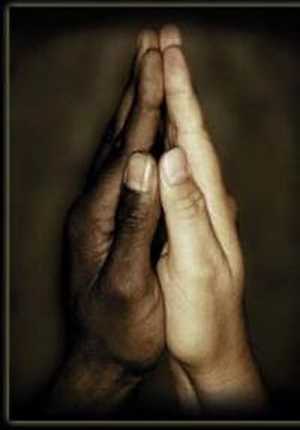
black-white-hands

When she reached the man of God at the mountain, she took hold of his feet. Gehazi came over to push her away, but the man of God said, “Leave her alone! She is in bitter distress, but the Lord has hidden it from me and has not told me why.” “Did I ask you for a son, my lord?” she said. “Didn’t I tell you, ‘Don’t raise my hopes’?”  Elisha said to Gehazi, “Tuck your cloak into your belt, take my staff in your hand and run. Don’t greet anyone you meet, and if anyone greets you, do not answer. Lay my staff on the boy’s face.” But the child’s mother said, “As surely as the Lord lives and as you live, I will not leave you.” So he got up and followed her. Gehazi went on ahead and laid the staff on the boy’s face, but there was no sound or response. So Gehazi went back to meet Elisha and told him, “The boy has not awakened.”

When Elisha reached the house, there was the boy lying dead on his couch.  He went in, shut the door on the two of them and prayed to the Lord. Then he got on the bed and lay on the boy, mouth to mouth, eyes to eyes, hands to hands. As he stretched himself out on him, the boy’s body grew warm.  Elisha turned away and walked back and forth in the room and then got on the bed and stretched out on him once more. The boy sneezed seven times and opened his eyes.

Elisha summoned Gehazi and said, “Call the Shunammite.” And he did. When she came, he said, “Take your son.”  She came in, fell at his feet and bowed to the ground. Then she took her son and went out.

(2 Kings 4:27-36)

Background

There were few Old Testament characters who had witnessed or been conduits for God’s massive power than Elisha. He assisted in the healing of a leper. He called fire down twice from heaven to extinguish a King appointed company of 51 men.  He yelled out a curse on 42 young boys who called him “Baldy”.  Two bears met the young instigators. It didn’t end well. Elisha’s connection to God’s power was renowned.

The Shunammite woman had generously provided a personal room on her roof for Elisha a few years before.   A bed. A chair. A table. And lamp. All the conveniences of a nice condo in the small town of Shunem. Comfortable.

Elisha reciprocated with an act of kindness. He brokered a deal with God that would provide a child to the woman. And her older husband. Barrenness would soon be confronted by the power of the Holy Spirit. And barrenness yielded to the power greater than itself. It always does. The child arrived. And all was well. Very well.

But this story took a difficult turn.   The child became ill with his father in a field. His head hurt. The father sent the child back to his mother at the house. The mother comforted her son. She held her son for hours. And then the unthinkable. The child died in her arms.

An unexpected and glorious blessing seemed to evolve into a twisted game of celestial take away. Ever been there?

The woman’s next move was clear. After laying her son on Elisha’s bed, the prophet was summoned. Immediately. He had orchestrated the blessing. Set an expectation. He had a direct line to God. Elisha needed to coordinate a way out.

The woman quickly found both Elisha and his aide, Gehazi, on a mountain. The boy’s condition was communicated. Elisha responded urgently. Gehazi, more fit than Elisha, should race back to the boy. Not stopping for anything.  And upon arriving at her house he was to place Elisha’s staff on the boy. Power transfer from the staff was the hope.

Gehazi executed the plan as described. The Shunammite woman was desperate – she kept pace with him all the way back to the house. Both arrived at the house. The staff was placed on the child. They watched. They waited. And they waited. Expectancy was met with silence. Nothing. Hope was on the ropes.  The plan wasn’t working.

Elisha arrived. Gehazi and mom were ordered to leave the room. The next step required focus. And privacy. Difficult discussions. God. Elisha. The prayer began.

Elisha physically got even closer to the boy. Mouth to mouth. Eyes to eyes. Hands to hands. The pleading continued. The body seemed to be warming up. Elisha walked the room. The pleading continued. Now, on to the boy again. Mouth to mouth. Eyes to eyes. Hands to hands.

This time seven sneezes from the boy ushered in a new reality. Life. Hope was no longer on the ropes.

The Shunammite woman and Gehazi were invited back into the room for a joyous meeting.

Even death could not thwart God’s power.

Reflections

Elisha’s connectivity to God’s power was prolific. But why on earth did his initial Plan A of placing the staff on the child not result in immediate healing?

This healing could have easily been consummated through power transfer through a staff. A version of this formula had worked for Peter in the New Testament.  Even for Jesus for the woman who reached out in a crowd and was healed by touching Jesus’ clothing.

But God was teaching another truth here. There are instances where healing and life is breathed in through intimate engagement. Closeness.   Not just “in the same room” closeness. But even closer. Our posture matters.

Over the last few months the United States has been experiencing renewed racial trauma. We know the names. We have seen the videos. The evidence.  No hiding the infractions this time. Visible and stark reminders. We just can’t hide from the reality. Racial injustice is still alive.

I’m a white male. Raised in the suburbs by Christian parents. Good parents.  My historical perspectives have been sadly framed from my perch at a safe distance. The typical informed portions of my view. One sided news networks. Talking heads; websites or Facebook accounts that conveniently enforced my intuitions.  Views from others who similarly were informed by perspectives…originating from afar.

It is often easier to dismiss societal pain with shallow platitudes such as: “Racism has seen so much progress over the years but impossible to fully eliminate”; “If only African American males would begin to step into stronger spiritual leadership of their families”; “Violent protests are so harmful”; “Other people of color also matter”.   Each thought incomplete. Clutching simple, but hugely incomplete paradigms, make it much easier to sleep at night.

For me, this season is a time for intimate engagement. To listen. To learn. From African American friends. Eyes to eyes. Learning about their stories. Learning about the challenges of living out the American dream even today within a different colored skin. Conveying I care.  Digesting books or podcasts taking different views. Watching movies highlighting racial hurt. My posture needs to change.

Lord, in this intimate posture of engagement let me be fixated on listening. And feeling. Not anxious to share my views. Or opinions. But open to receive the potential for a truth that has been hidden from my view. As I draw close. Mouth to mouth. Eyes to eyes. Hands to hands. Breathe new life into me. Let my new course not end with listening and learning. But be a precursor to empathetic action. Advocacy. Let my new course more accurately reflect your heart. Let me more clearly see what You see. Feel what You feel. Breathe life into me like the Shunammite boy. Please let the church not easily accept the status quo.  But be conduits for accelerated racial healing.  Be glorified in our reaction. Amen.

What if our life’s purpose requires a path through close encounters and engagements with the hurting in order to wholly fulfill His mission for our lives?

What if there is power in our posture?

What if the church adopted a posture marked by empathetic presence and loved unlike any other time in our country’s history and invited a fresh openness to the gospel, even ushering in revival?

Words matter…

Quotefancy-1583839-3840x2160

David said to Saul, “Let no one lose heart on account of this Philistine; your servant will go and fight him.” Saul replied, “You are not able to go out against this Philistine and fight him; you are only a young man, and he has been a warrior from his youth.” But David said to Saul, “Your servant has been keeping his father’s sheep. When a lion or a bear came and carried off a sheep from the flock, I went after it, struck it and rescued the sheep from its mouth. When it turned on me, I seized it by its hair, struck it and killed it.  Your servant has killed both the lion and the bear; this uncircumcised Philistine will be like one of them, because he has defied the armies of the living God.  The Lord who rescued me from the paw of the lion and the paw of the bear will rescue me from the hand of this Philistine.”

Saul said to David, “Go, and the Lord be with you.”

 Then Saul dressed David in his own tunic. He put a coat of armor on him and a bronze helmet on his head.  David fastened on his sword over the tunic and tried walking around, because he was not used to them.

“I cannot go in these,” he said to Saul, “because I am not used to them.” So he took them off. Then he took his staff in his hand, chose five smooth stones from the stream, put them in the pouch of his shepherd’s bag and, with his sling in his hand, approached the Philistine.

 Meanwhile, the Philistine, with his shield bearer in front of him, kept coming closer to David.  He looked David over and saw that he was little more than a boy, glowing with health and handsome, and he despised him.  He said to David, “Am I a dog, that you come at me with sticks?” And the Philistine cursed David by his gods.  “Come here,” he said, “and I’ll give your flesh to the birds and the wild animals!”

 David said to the Philistine, “You come against me with sword and spear and javelin, but I come against you in the name of the Lord Almighty, the God of the armies of Israel, whom you have defied.  This day the Lord will deliver you into my hands, and I’ll strike you down and cut off your head. This very day I will give the carcasses of the Philistine army to the birds and the wild animals, and the whole world will know that there is a God in Israel.  All those gathered here will know that it is not by sword or spear that the Lord saves; for the battle is the Lord’s, and he will give all of you into our hands.”

 As the Philistine moved closer to attack him, David ran quickly toward the battle line to meet him.  Reaching into his bag and taking out a stone, he slung it and struck the Philistine on the forehead. The stone sank into his forehead, and he fell face down on the ground.

(1 Samuel 17: 32-49)

Background

The Philistines occupied a hill. The Israelites another. There was a valley between. Tensions were high. And mounting. The Israelites were poised for battle. So were the Philistines. But neither had yet been prepared to make a decisive move. And so this 40 day epic dance played out. Sometimes in battle you make the first move. Other times you prepare to make the second counter move. And sometimes you just wait. Both sides were waiting.

The Philistines offered an interesting proposal: Each side present their best fighting man. Man versus man. Winner take all. Slight problem from the Israelites lens. The Philistines had Goliath. The giant. Goliath taunted. Goliath flexed. And Goliath raged. The Israelites watched. And listened. They looked from side to side at potential candidates to represent Israel. And they began to wilt.

The Israelite king was on the scene. King Saul. And he was being called out. Publicly shamed. An effective tactic for the male gender that attaches so much to personal respect. Something needed to be done. And he knew it. His men were beginning to lose heart. Truth was that Saul was terrified. But he needed to do something….but do what?

David, who had recently been assigned as a harpist for Saul, had arrived on the scene to hand out cheeses to one of Saul’s military commanders. After dropping off the cheeses at the supply tent, David raced to the front line to check out the status. He wasn’t impressed. Goliath wasn’t just defying any army. Goliath was defying the army of God. David’s question – “What will be done for the man who kills this Philistine and removes this disgrace from Israel?” All were fixated on the Goliath obstacle. David’s mind had already shifted to the other side of the victory. David was different.

Saul was informed that David was visiting. And offering a much different point of view. David’s final reminder to Saul “The Lord who rescued me from the paw of the lion and the paw of the bear will rescue me from the hand of this Philistine.”

David reminded Saul that God was a worthy defender. It was his power that would guarantee victory.   Give Saul credit – he made a decision to accept Goliath’s challenge. Israel would have a representative in the battle after all. In the spirit of “go big or go home” Saul put all his chips behind the young Bethlehem shepherd; the harpist; the cheese deliverer. The hopeful young man with faith in a bigger power.

David’s persuasive reminder to Saul was a critical ingredient in this story. It is often overlooked. It awakened hope in Saul. It persuaded him. Saul reviewed his options. He reviewed his most experienced warfighters. His best. He reviewed David. He thought about David’s words.

Simply, this clash between a giant and David never takes place unless Saul ratifies it. And he did.

Words instill hope. They remind. They offer hope. Simply, battles can be initiated and won or lost on words. Words matter.

Reflections

This heart of ours is so easily prone to be faint. To melt. To fixate on the giant in front of us. To easily elevate the strength of the seen. Over the power of the unseen. And to allow our minds to be preoccupied with the oh so visible giant – that circumstance that seems insurmountable. And it is in this focus that our words can follow. And be negative.

These last few months the world is facing a new giant – a giant called the coronavirus. It is so easy to fixate on the statistics. The endless news feeds. On the negativity. On the hopelessness. To get frustrated. And to lose faith.

It is important to be reminded again that words matter. As believers we are meant to represent a world view that contrasts to the secular. The conventional. We are obligated to make sure that our narratives and our language focus on hope. And faith. And the strength of an unseen power. Of a God who relishes redeeming the broken. This is a massive opportunity to demonstrate a kingdom perspective. With our friends. And our families.

Why? Because words matter. And the world right now is desperate for hopeful and faith-filled words.

Lord, you know that this entry was written as a reminder for me. You have been whispering that my narratives and descriptions this last month have fallen short on this virus topic. I have disproportionately focused on the challenge. Please help me and others to begin shifting our language to reflect more faith and hope. Ultimately, recognizing and acknowledging that you “have this”. Please initiate an assault on the current enemy as you did on Goliath. Be gloried in it all. Amen.

What if one of God’s principal plans through the virus challenge is for believers to represent a kingdom vision against a backdrop of hopelessness? Even to our families? Our children?

What if our more hope-filled narratives provide critical ingredients for searching friends and family member to some day come to faith?


Another offering critique…

Capture

“It is you priests who show contempt for my name.  But you ask, ‘How have we shown contempt for your name?’ “By offering defiled food on my altar.  “But you ask, ‘How have we defiled you?’  “By saying that the Lord’s table is contemptible.  When you offer blind animals for sacrifice, is that not wrong? When you sacrifice lame or diseased animals, is that not wrong? Try offering them to your governor! Would he be pleased with you? Would he accept you?” says the Lord Almighty.   “Now plead with God to be gracious to us. With such offerings from your hands, will he accept you?”—says the Lord Almighty.   “Oh, that one of you would shut the temple doors, so that you would not light useless fires on my altar! I am not pleased with you,” says the Lord Almighty, “and I will accept no offering from your hands.  My name will be great among the nations, from where the sun rises to where it sets. In every place incense and pure offerings will be brought to me, because my name will be great among the nations,” says the Lord Almighty.  “But you profane it by saying, ‘The Lord’s table is defiled,’ and, ‘Its food is contemptible.’  And you say, ‘What a burden!’ and you sniff at it contemptuously,” says the Lord Almighty. “When you bring injured, lame or diseased animals and offer them as sacrifices, should I accept them from your hands?” says the Lord.  “Cursed is the cheat who has an acceptable male in his flock and vows to give it, but then sacrifices a blemished animal to the Lord. For I am a great king,” says the Lord Almighty, “and my name is to be feared among the nations.

Malachi 1:7-14

Background

The last book of the old testament.  A final view of the Israelite people before Jesus’ ministry was ushered into the biblical narrative.  Malachi’s Hebrew name comes from a word meaning “messenger”.  He was a prophet.  And like other prophets before him, he wasn’t called by God to communicate with nuance.  Or diplomacy.

This was a heart examination.  By a prophet.  And the prognosis wasn’t good.

The people had become sloppy in the selection of their offerings.  They were taking short cuts.  Holding back their best.  They were sacrificing their lame and even diseased animals.  Selfishness had entered in.  Their priorities had shifted.  It was more important to keep the best.  God would get the second best.  Not good.  Simply, their actions reflected a heart that had shifted.  Another affection received the priority.

God’s response: “Cursed is the cheat who has an acceptable male in his flock and vows to give it, but then sacrifices a blemished animal to the Lord”.

Why?  “For I am a great king and my name is to be feared among the nations”.

Put another way, his kingship and glory simply demands our best.

Reflections

There is very little ambiguity here.  The Lord doesn’t like left-over sacrifices.  At all.  Offerings provided in this context were described many times as “contemptible”.  Webster defines contemptible as “mean, vile and worthless; disdain; hatred of what is mean or deemed vile”.  Not adjectives you want attached to God’s view of your offering.

The context of how we give our offerings isn’t negligible.  It is critical.  And this wasn’t the first time that God had provided an offering critique.  Four chapters into Genesis, Cain’s offering (Adam and Eve’s first son) was also not viewed favorably.

Being reflective about the status of our offerings is prudent.  It is very important to God.

How do we provide offerings in today’s kingdom context?

  1. Our time
  2. Our worship
  3. Our right living
  4. Yes, our financial resources

There is so much competition for our time.  Our resources.  And even our heart and mind.  We have professional and college sports.  Social media.  Kid’s activities.  Facebook.  Politics.  Instagram.  Vehicles.  Youtube.  Vacations.  Netflix.  Diets.  Pets.  Exercise.

Over the last few years I’ve had the privilege of observing the non-western church in action.  Many of these groups have been fearless in their pursuit of “sacrificing their best”.  They are simply stop gaps in their community.  They give their time and resources extravagantly.  And this pursuit is impacting their world.  Love is being modeled.  And I believe the Father is proud and smiling…

Question:  When you do the math in your life do you start with adding up all the life requirements and “nice to haves” and then calculate what is left over to give to God?  Or do you start by allocating priority to God and let the other requirements and “nice to haves” as the left over?

Lord, help me to lavishly sacrifice with my resources and my time.  My worship.  Help me to simply be more present.  To see what you see and feel what you feel.  My mind is so busy.  It is constantly processing.  Thinking.  Planning.  But I need your help to ensure that I give my best in all parts of my life.  Not just a few compartments.  Help the western church to not compromise.  Or to be distracted.  Help us to make you proud.  And to smile.  Amen.

What if we took this scripture seriously and became more deliberate and generous in providing offerings?  Would our hearts begin to shift?

What if the western church began to fall in love with extravagantly extending offerings of all types?  What would happen to our communities?  And our families?